
Why Choose Amex Construction
Certified Installation of Innovative/Alternative (I/A) Septic Systems: Our Team is Trained in I/A systems & stays up to date on industry advances
Start-to-Finish Collaboration: From the very first soil evaluation and perc test, we work directly with licensed soil evaluators, septic designers, and local boards of health to make sure your system is designed, permitted, and installed the right way.
By-the-Book Precision: Every installation follows the engineered plan exactly—no shortcuts, no guesswork. Compliance is guaranteed.
Local Expertise: We’ve built systems across Massachusetts. We know each town’s requirements and quirks, which means fewer delays and no surprises.
One-Stop Service: We partner with trusted plumbers and electricians so that we can take care of the entire process—including any necessary work inside your home or business. One call, one team, complete peace of mind.
Septic to Sewer Conversions: From Title 5 abandonment to Connecting to the Municipal sewer & Specialty pumps like Environmental One - All terrain sewer
Full Service, Start to Finish: Testing, design coordination, excavation, installation, inspections—we handle it all so you can focus on selling, buying, or just living in your home without stress.
Septic Installation, Replacement & Title 5 Compliance Across the South Shore
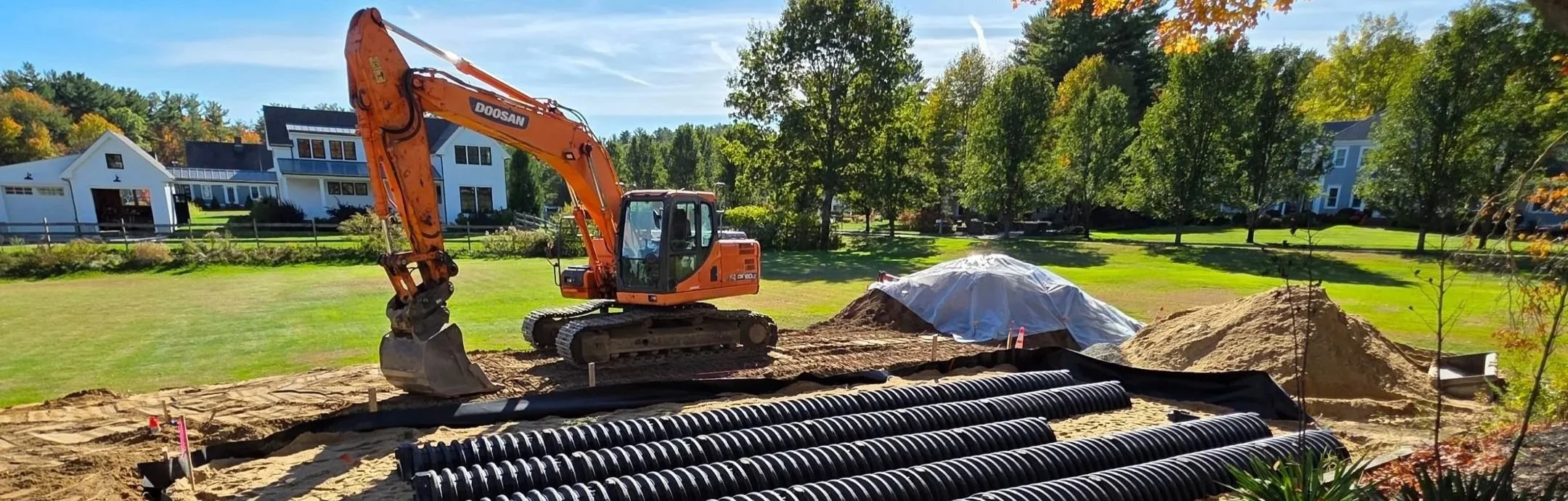
From soil evaluation and engineered design coordination to excavation, installation, final grading, and Board of Health inspection, Amex manages septic projects with the planning and precision Massachusetts properties require.
We Serve:
Homeowners (new & existing)
Realtors / Home sellers
Buyers needing system upgrades
Commercial properties
Developers & landowners
Condo associations & shared systems

Septic issues rarely fix themselves — and waiting often makes them worse.
If you’re experiencing slow drains, pooling water, odors, or system alarms, our team can diagnose the issue and determine whether repair or partial replacement is the right solution.
Septic System Repair Services
Septic Repairs We commonly handle:
Tank Riser Install
Effluent filter Installation & Replacement
Pipe and distribution box repair & replacement
Pump system repairs
I/A system component servicing
Title 5 compliance corrections
Our goal is straightforward: restore system performance while minimizing disruption to your property.
When a septic system fails a Title 5 inspection or reaches the end of its service life, full replacement may be required.
We guide homeowners through the replacement process with clear communication and structured planning. From coordinating engineered redesign and permitting to excavation and final approval, we manage each step to ensure compliance and long-term reliability.
Septic System Replacement & Upgrades
Replacement services include:
• Removal and abandonment of failed systems
• coordinate Engineered system redesign
• Upgrade to Innovative/Alternative (I/A) systems
• Site regrading and restoration
• Coordination with local boards of health
A properly installed replacement system not only restores functionality — it protects property value and ensures regulatory compliance for years to come.
Installing a new septic system requires more than excavation — it demands careful planning, engineered design, and strict adherence to Massachusetts Title 5 regulations.
At Amex Construction, we manage the full installation process from site evaluation and soil testing to permitting, excavation, and final inspection. Every system we install is designed to meet local health department requirements while delivering long-term durability and performance.
Septic System Installation
Our installation services include:
• Site evaluation and system layout
• Coordination with engineers and health departments
• Title 5–compliant system design implementation
• Tank and leach field installation
• Innovative/Alternative (I/A) system installs
• Final grading and site restoration
We focus on building septic systems that perform efficiently, protect groundwater, and stand up to New England conditions.
Innovative & Alternative (I/A) systems Installation & services
Common Types of I/A Systems
Bottomless Sand Filters
Recirculating Sand Filters
Textile filters
Orenco Advantex Wastewater Treatment systems
Presby Environmental Advanced Enviro-Septic®
Kleantu Nitroe units
Aerobic treatment units (ATUs)
Nitrogen-reducing bioreactors
Comprehensive I/A System Services
Preconstruction Site evaluation and system design coordination
Permitting and coordination with local Boards of Health
Installation and construction
Ongoing operation & maintenance agreements
Monitoring and reporting (as required by Title 5)
What Are I/A Systems?
Innovative/Alternative (I/A) systems are advanced septic technologies designed to treat wastewater more effectively than traditional systems. They are often required in environmentally sensitive areas or when standard Title V systems aren’t feasible due to soil conditions, high groundwater, or small lot sizes.
Why Choose an I/A System?
Environmental protection: Better nitrogen and phosphorus removal to protect water resources.
Flexibility: Can be designed to fit challenging sites where traditional leach fields won’t work.
Regulatory compliance: Approved by the Massachusetts Department of Environmental Protection (MassDEP) for use under Title V.
Long-term value: Reduces the risk of system failure and costly environmental impacts.
Why Amex Construction?
At Amex Construction, we bring decades of Title 5 and septic system expertise to projects that demand advanced solutions. Whether your property requires an I/A system to meet local regulations or you’re proactively investing in environmental stewardship, our team has the experience to get it done right.
Septic to Sewer Conversion Services in Massachusetts
Switching from a septic system to a town sewer connection can feel overwhelming. Homeowners often worry about what it means for their property, how long it will take, and what it might cost. At Amex Construction, we specialize in making this transition smooth, stress-free, and built to last.
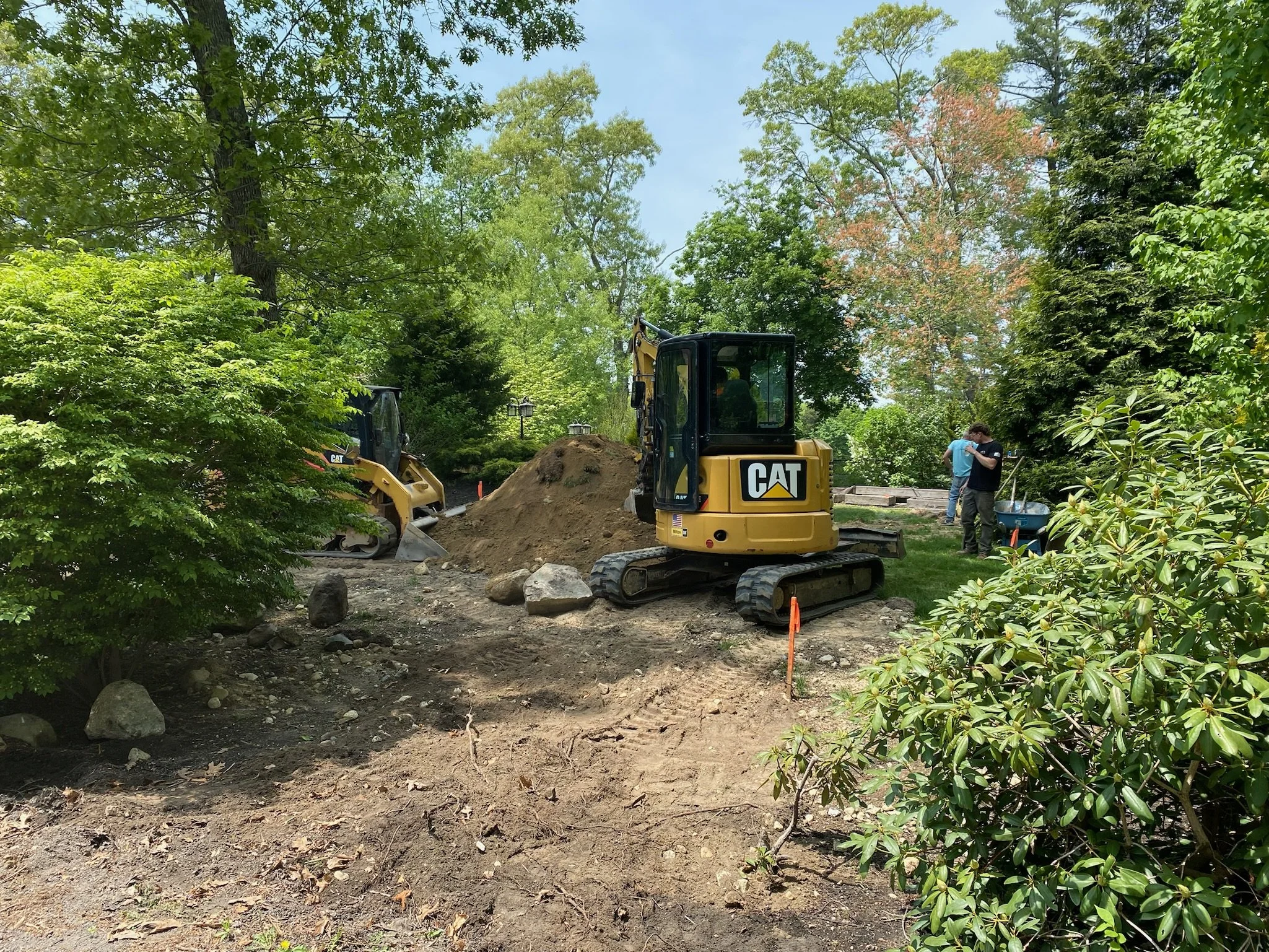
Our team works directly with local towns and utility departments, handling permits, approvals, and inspections so you don’t have to juggle the paperwork. We take care of every step—from disconnecting your old system to connecting your home to the municipal sewer line—while keeping your yard and property protected as much as possible.
For many homeowners, this upgrade brings long-term peace of mind. No more septic pumping schedules, no surprise system failures, and no uncertainty when it comes time to sell your home. Connecting to the sewer means reliability, lower maintenance, and higher property value.
If you’re facing a failing septic system or just want to explore your options, we’re here to guide you through it with honesty, clarity, and dependable workmanship. We’ve helped local families make the switch—and we’ll be right there with you too.
Common Septic Components
What Massachusetts Homeowners Need to Know about Septic systems
A septic system isn’t complicated, but it does require care. A properly maintained system can last decades, while a neglected one can fail early and cost tens of thousands of dollars to replace. Title 5 isn’t just a regulation—it’s also a guide for how to keep your system working for you.
Key points:
Inspections: Stay ahead of problems with annual or Bi-annual system checks, not just when you sell your home.
Regular pumping: Every 3-5 years is recommended by Mass Dep & U.S EPA; Some System permits have specific pumping schedules.
Water use: Septic systems can only handle so much at once. Spread out laundry loads and fix leaky toilets or faucets to avoid overloading.
What goes down the drain matters: Avoid FOG or Fats Oils & Grease. Also avoid flushing non septic safe toilet paper, wipes, or harsh chemicals. They can clog or kill the bacteria your system needs to function.
Protect your drain field: Don’t Park vehicles, build decks, or plant trees with invasive roots over your leaching area.
Common Questions About Septic Installation & Repair in Massachusetts
How do I know if my septic system needs to be repaired or replaced?
It depends on the type and extent of the problem. Localized issues—such as broken pipes, failed pumps, or distribution box problems—can sometimes be repaired. Widespread drain field failure, structural tank issues, or systems that no longer meet Title V requirements usually require full replacement. A proper evaluation is the only way to know for sure.
Does a failed Title 5 inspection always mean I need a new system?
No. A failed Title V inspection does not automatically mean full replacement. Some systems qualify for repairs or conditional approvals depending on the failure criteria, site conditions, and Board of Health requirements. We explain your options clearly and recommend the least disruptive, code-compliant solution.
Do I need an engineer or septic designer?
Yes. Most septic installations and many major repairs require engineered plans prepared by a licensed septic designer and approved by the local Board of Health. We coordinate directly with soil evaluators, designers, and town officials so the process moves efficiently.
How long does a septic installation or replacement take?
The on-site construction phase typically takes 1–5 days for most residential systems, depending on soil conditions, access, system type, and weather.
The full project timeline—including design, permitting, and Board of Health approvals—can range from a few weeks to several months, depending on the town and complexity.
Will my yard be destroyed during installation?
No. Septic installation is disruptive by nature, but we take steps to minimize disturbance and restore the site. Final grading, loam, and seed are included where applicable. We’ll explain exactly what areas will be affected before work begins.
Can you install Innovative / Alternative (I/A) septic systems?
Yes. We install and repair Innovative / Alternative (I/A) systems, which are often required in environmentally sensitive areas, high groundwater conditions, or small lots. These systems involve additional components and long-term maintenance requirements, which we explain clearly upfront.
Do you handle permits and Board of Health coordination?
Yes. We manage the process from start to finish — including coordination with soil evaluators, septic designers, and the local Board of Health. We know that each town has its own expectations and inspection procedures, and we account for that in scheduling and planning.
How long do permits and Board of Health approvals usually take?
Permitting and BOH approval timelines vary by town. Some Boards of Health can permit in 2–4 weeks once plans are submitted, while others can take longer based on meeting schedules and workload. We work closely with your designer and BOH to streamline this process and get you scheduled as efficiently as possible.
What affects the cost of a septic repair or installation?
Cost depends on several factors, including:
Soil conditions and groundwater depth
System size and type
Site access and excavation constraints
Local Board of Health requirements
Whether an I/A system is required
Wetland or environmental constraints
We provide clear estimates once the site and design requirements are known.
What price range should I expect for a new septic system or major repair?
While every property is different, most full septic system replacements fall in the $15,000-$50,000+ range in Southeastern Massachusetts, depending on soil conditions, system size/type, access, wetland constraints, and local BOH requirements. Repairs often cost significantly less — but we provide written estimates after evaluation.
Can I live in my home while the septic system is being replaced?
In most cases, yes. We plan installations to minimize downtime, but there may be short periods where water use is restricted. We’ll communicate expectations clearly before work begins.
Do you work on commercial or multifamily septic systems?
Yes. We install and repair septic systems for multifamily properties, commercial buildings, and shared systems, including projects with higher design flows and additional regulatory oversight.
What happens after the system is installed?
After installation, we coordinate all required inspections and Board of Health sign-offs. Once approved, you receive documentation confirming compliance. We also review maintenance and pumping recommendations so you can protect your investment long-term.
Can a poorly installed system pass inspection but still fail later?
Yes — and it happens more often than people realize. Systems installed without proper attention to soil conditions, drainage, or long-term hydraulics can pass initial inspections and fail years later. Our focus is on building systems that perform long after sign-off, not just ones that get approved.
Do you offer warranties or maintenance agreements?
Yes. We provide guidance on system warranties where available and can discuss long-term maintenance plans — especially for systems with mechanical components like pumps or I/A systems.
Will the Board of Health inspect once installation is complete?
Yes — most towns require a final BOH inspection after installation and before issuing a Certificate of Compliance. We coordinate the inspection, ensure your system is installed per approved plan, and handle any follow-ups if needed
When is the best time to contact you for septic installation or repair?
Ideally before you list your home, start major renovations, or experience system symptoms. Early evaluation prevents last-minute delays and often reduces cost by avoiding emergency repairs.
Why choose Amex Construction for septic installation or repair?
We combine inspection knowledge, construction experience, and regulatory understanding under one roof. That means fewer surprises, realistic timelines, and systems built to pass inspection and perform as intended — not just meet minimum requirements.
Septic System Don’ts
Your septic system is tough but not indestructible. The fastest way to shorten its life (and your wallet) is by treating it like a garbage can or a parking lot. Here’s what not to do:
Don’t flush non-biodegradable items: Wipes (even “flushable”), paper towels, feminine products, diapers, and dental floss all clog and damage the system.
Don’t pour grease, fats, or oils down the drain: They harden in pipes and overwhelm the tank.
Don’t use harsh chemicals: Bleach, drain cleaners, and antibacterial products kill the beneficial bacteria your septic system needs to work.
Don’t overload with water: Avoid running multiple long showers and laundry loads back-to-back. Sudden surges can push solids into the drain field.
Don’t drive or park on the leach field: Vehicle weight compacts the soil and crushes pipes.
Don’t plant trees or shrubs with aggressive roots nearby: Roots invade and block leach lines. Stick to grass.
Don’t ignore warning signs: Slow drains, sewage odors, or standing water near your system are all red flags—get them checked fast.
Let’s Work Together
If you're interested in working with us, complete the form with a few details about your project. We'll review your message and get back to you within 48 hours.