

Septic Inspections for South Shore & Cape Cod Properties
A Title V Inspection Is the Only Way to Know If Your Septic System Is Actually Working
Pumping a septic tank removes waste.
A Title V inspection evaluates whether the entire system is functioning, compliant, and safe.
If you own, are selling, buying, refinancing, renovating—or simply unsure about your system’s condition—A Title 5 septic inspection is the only way to determine the true condition of your septic system. Pumping a tank alone does not evaluate whether the system is functioning properly or meeting state and local requirements.
Title V Inspections for:
Homeowners
Home buyers & sellers
Realtors & attorneys
Property managers
Commercial property owners
Condo & shared-system associations
Industrial Facilities
Septic Pumping vs. Title V Inspection — What’s the Difference?
Myth:
“If my tank is pumped regularly, my system must be fine.”
Reality:
Pumping does not evaluate:
If your tank really needs to be pumped
Drain field performance
Soil absorption
Hydraulic overload
Structural integrity
Code compliance
Setbacks to wells or waterways
Only an Official Title 5 inspection evaluates the full system, determines system pumping and produces documentation accepted by Boards of Health and Mass DEP.
What Is a Title V Septic Inspection?
If you own a home in Massachusetts with a septic system, you’ve likely heard the term Title 5. Title 5 is the state regulation that governs how septic systems are inspected, maintained, and evaluated for compliance to protect public health and groundwater.
A Title 5 septic inspection can be Official or Unofficial & is the only way to determine the true condition of your septic system. Pumping a tank alone does not evaluate whether the system is functioning properly or meeting state and local requirements.
When Title 5 Inspections Are Required in Massachusetts (310 CMR 15.301)
Massachusetts Title 5 requires a septic system inspection in these situations:
1) At time of property transfer (most sales)
A system must be inspected at or within 2 years prior to transfer of title.
An inspection done up to 3 years prior can be used only if it’s accompanied by pumping records showing the system was pumped at least once per year during that time.
If weather prevents inspection at transfer, it can be completed as soon as weather permits, but no later than 6 months after transfer (with required written notice).
2) Certain condos / co-ops (periodic requirement replaces “each sale” in some cases)
For a facility with five or more condominium or cooperative units, each system must be inspected at least once every 3 years (instead of at each unit transfer).
For fewer than five units, Title 5 allows either:
inspection at least once every 3 years, or
inspection at time of unit transfer (per the transfer rules above).
3) Before certain permitted changes (additions/renovations that trigger permits)
A system must be inspected before:
a change in type of establishment,
an increase in design flow, or
an expansion of use
when a building permit or occupancy permit is required.
(Title 5 also notes that some footprint-only additions may be handled as a component-location assessment, and if official records clearly establish locations, an inspection may not be required for footprint changes.)
4) Shared systems
Shared systems must be inspected every 3 years.
5) 10,000–15,000 GPD systems (large systems) — 5-year cycle
Systems with total design flow ≥ 10,000 gpd and < 15,000 gpd have a basin-based initial inspection schedule in the code, and then must be re-inspected during the fifth calendar year after the initial inspection year, and every fifth calendar year thereafter.
(So: every 5 years, on the calendar-year schedule Title 5 lays out.)
6) Property is divided / ownership of multiple facilities is combined
When a facility is divided, or ownership of multiple facilities is combined in the way Title 5 defines, all systems serving the facility/facilities must be inspected.
7) When ordered by the Board of Health, MassDEP, or a court
All systems must be inspected when the owner/operator is ordered to do so by the local approving authority, the Department, or a court.
Why Choose Amex Construction for Title 5 Inspections
Certified & Current with Title 5 and I/A Systems
Our inspectors are trained in Innovative/Alternative (I/A) septic systems and stay current with evolving Title 5 regulations and local enforcement standards. No outdated calls. No missed details.
Inspection-First, Compliance-Focused
We conduct Massachusetts Title 5 septic inspections with a sharp focus on what Boards of Health and lenders actually require—clear results, clean reporting, and defensible documentation.
Straight Answers, No Guesswork
If a system passes, you’ll know it quickly. If it doesn’t, we explain exactly why, what’s required, and what your realistic options are—without panic or fluff.
Local Knowledge That Prevents Delays
We’ve worked with Boards of Health across Massachusetts. We know how different towns interpret Title 5, which helps avoid re-inspections, paperwork issues, and last-minute transaction problems.
Inspection + Repair Capability
If repairs or upgrades are required, we can handle them in-house or coordinate the process—no scrambling to find another contractor, no broken handoffs.
Built for Real Estate Timelines
We work directly with homeowners, buyers, sellers, and real estate professionals to keep inspections aligned with closing schedules and compliance deadlines.
One Team, One Point of Contact
From inspection through compliance resolution, you’re dealing with one accountable team—not inspectors who disappear once the report is issued.
Why a Passing Title 5 Inspection Matters
A passing Title V inspection is often required to complete a real estate transaction. Without it, sales can be delayed, negotiations can stall, and unexpected costs can surface late in the process.
A proper inspection gives homeowners, buyers, and sellers clear answers—whether the system is functioning as intended or whether corrective action is required to stay compliant.
At Amex Construction, we perform Title V septic inspections across Hanover, the South Shore, and Cape Cod, with a deep understanding of local soil conditions and Board of Health requirements. Our goal is to give you accurate information, clear documentation, and a straightforward path forward.
Title 5 Inspection Timeline: What to Expect
A Title V inspection isn’t just a site visit — it’s a documented process that includes records review, field evaluation, and regulatory reporting. Here’s how the process typically works.
1) Records Review & Pre-Inspection Research
Before the site visit
When available, we obtain as-built plans, system location information, and historical records directly from the local Board of Health. These records help confirm system type, layout, design flow, and any prior conditions or approvals associated with the property.
Where required or applicable, we also review historical water usage records for the previous 24 months to help evaluate system use relative to design flow, as contemplated under Title V inspection and evaluation standards.
If records are unavailable or incomplete, the inspection proceeds using field verification and best professional judgment, as allowed under Title V.
2) On-Site Inspection
Typically 1–2 hours for residential properties
During the inspection, we:
Locate and uncover required system components
Inspect all septic systems serving the property (including duplex systems, secondary systems, and laundry systems where present)
Evaluate tank condition, distribution systems, leaching areas, groundwater indicators, setbacks, and resource proximity
Identify any conditions that meet Title V failure criteria
If the property includes a cesspool, pumping is required during the inspection process so the structure and condition can be properly evaluated.
For septic tanks, pumping is not performed prior to inspection. Sludge and scum levels are measured during the inspection, and pumping recommendations are made based on those measurements and system condition.
3) Well Water Sampling (When Required)
Lab turnaround typically 3–5 business days
If a private drinking water well is located within 100 feet of the septic system but 50 feet or more away, Title V requires a certified laboratory water test demonstrating acceptable results before certain setback conditions can be deemed compliant.
When required, water samples are collected, submitted to a certified laboratory, and documented as part of the inspection record. Reporting timelines for well results are governed by laboratory processing and chain-of-custody requirements under Title V.
4) Inspection Report Preparation
After site work and lab results are complete
The Title V inspection report documents:
System description and condition
Inspection findings measured against Title V failure criteria
Required attachments (including lab results, pumping documentation, and records reviewed)
Title V requires the inspection report to be completed accurately and submitted to the local Board of Health. While the regulation defines what must be reported, specific submission timelines may be set by the local Board of Health, particularly in real estate transactions.
We complete reports as promptly as conditions allow, taking into account:
Lab result availability (when applicable)
Record completeness
System complexity
5) Board of Health Submission & Next Steps
Once completed, the inspection report is submitted to the appropriate authorities and provided to the property owner or transaction parties.
If the system:
Passes — documentation supports compliance
Conditionally passes — required actions and timelines are clearly outlined
Fails — corrective options and regulatory timelines are explained
Important Timing Notes
Weather conditions (frozen ground, snow cover, saturation) can delay inspections
Recent pumping (within two weeks) can delay or invalidate an inspection
Well testing requirements can extend timelines due to lab processing
Local Board of Health policies may impose additional scheduling or submission requirements beyond the base Title V code
Why This Matters
Understanding the full Title V timeline helps avoid last-minute delays, failed inspections, and transaction issues. Our process is designed to gather the required records, perform a compliant inspection, and complete reporting correctly — the first time.
What Homeowners Need to Know
A septic system isn’t complicated, but it does require care. A properly maintained system can last decades, while a neglected one can fail early and cost tens of thousands of dollars to replace. Title V isn’t just a regulation—it’s also a guide for how to keep your system working for you.
Key Septic System Care & Maintenance Guidelines
Don’t Skip Inspections
Waiting until you sell your home to think about your septic system is a gamble. Regular annual or bi-annual system checks help identify issues early, long before they turn into failures, transaction delays, or costly repairs.
Inspections aren’t just about compliance — they’re about protecting the system you already own.
Regular Pumping Matters
The Massachusetts Department of Environmental Protection (MassDEP) and the EPA recommend septic tanks be pumped every 3–5 years to prevent solids from carrying over into the drain field. Some systems — particularly I/A systems or systems operating under specific permits — may require more frequent pumping based on approval conditions or usage.
Regular pumping helps extend system life and supports accurate Title V inspections.
Manage Water Use
Septic systems are designed for a specific flow. Excessive or sudden water use can overload the system and reduce treatment performance.
Best practices include:
Spreading out laundry loads
Repairing leaking toilets, faucets, or fixtures
Avoiding unnecessary water use during heavy rainfall
Hydraulic overload is one of the most common contributors to septic failure.
Be Careful What Goes Down the Drain
Septic systems rely on naturally occurring bacteria to break down waste. Certain materials disrupt that process.
Avoid:
FOG (Fats, Oils, and Grease)
Non-septic-safe toilet paper, Feminine products or Flushable wipes
Harsh chemicals, solvents, or antibacterial cleaners
These materials can clog components, damage the drain field, or kill the bacteria your system needs to function.
Protect the Drain Field
Your leaching area is a critical part of the system and must remain uncompacted and undisturbed.
Do not:
Park vehicles or equipment over the drain field
Build decks, sheds, or patios on top of it
Plant trees or shrubs with invasive root systems nearby
Pile snow or direct Stormwater to the drain field
Compaction and root intrusion are common — and preventable — causes of system failure.
Septic System Don’ts
Your septic system is tough but not indestructible. The fastest way to shorten its life (and your wallet) is by treating it like a garbage can or a parking lot. Here’s what not to do:
Don’t flush non-biodegradable items: Wipes (even “flushable”), paper towels, feminine products, diapers, and dental floss all clog and damage the system.
Don’t pour grease, fats, or oils down the drain: They harden in pipes and overwhelm the tank.
Don’t use harsh chemicals: Bleach, drain cleaners, and antibacterial products kill the beneficial bacteria your septic system needs to work.
Don’t overload with water: Avoid running multiple long showers and laundry loads back-to-back. Sudden surges can push solids into the drain field.
Don’t drive or park on the leach field: Vehicle weight compacts the soil and crushes pipes.
Don’t plant trees or shrubs with aggressive roots nearby: Roots invade and block leach lines. Stick to grass.
Don’t ignore warning signs: Slow drains, sewage odors, or standing water near your system are all red flags—get them checked fast.
Don’t have your tank Pumped Prior to an Inspection:
Many homeowners assume that regular septic pumping tells them whether their system is working properly. It doesn’t.
A pump-out removes waste—but it does not evaluate system components, soil conditions, drainage performance, or compliance with Massachusetts Title 5 regulations. The only way to accurately determine whether a septic system is functioning and compliant is through a Title 5 septic inspection.
At Amex Construction, we perform Title V inspections for homeowners, buyers, sellers, and real estate professionals across Hanover, the South Shore, and Cape Cod. We understand local soil conditions, system types, and how each town’s Board of Health enforces Title V.
If an inspection shows your system is functioning properly, you get clear documentation and peace of mind. If issues are identified, we explain what they mean, what’s required, and how to move forward—without guesswork or unnecessary work.
Title 5 Septic Inspection FAQs (Massachusetts)
Is pumping my septic tank the same as a Title 5 inspection?
No. Pumping removes solids from the tank. A Title V inspection evaluates the entire septic system — tank, distribution system, soil absorption area, setbacks, groundwater indicators, wells, and regulatory compliance. Only a Title V inspection produces documentation accepted by Boards of Health and lenders.
When is a Title 5 inspection required?
Under Massachusetts Title V (310 CMR 15.301), inspections are required at property transfer, for certain condominiums and shared systems, before certain permitted changes or increases in use, for large systems (10,000–15,000 GPD) on a defined schedule, and whenever ordered by a Board of Health, MassDEP, or court. Local Boards of Health may impose additional requirements.
Who is responsible for ordering and paying for a Title 5 inspection?
In most real estate transactions, the seller is responsible unless otherwise negotiated in the purchase agreement. For other situations, responsibility may fall on the property owner, facility operator, or applicant for a building or occupancy permit.
How long is a Title 5 inspection valid?
For property transfer purposes, an inspection is generally valid for up to 2 years, or up to 3 years if accompanied by documentation showing the system was pumped annually. Validity can also depend on use, system changes, or Board of Health requirements.
What does “pass,” “conditional pass,” or “fail” mean?
Pass: The system meets Title V requirements at the time of inspection.
Conditional pass: The system meets minimum standards but requires corrective action within a defined time frame (commonly pumping or minor repairs).
Fail: The system meets one or more Title V failure criteria and must be repaired, upgraded, or replaced to achieve compliance.
What happens if my system fails a Title 5 inspection?
A failed inspection does not automatically kill a sale. Title V allows timelines for corrective action, escrow arrangements, or post-closing upgrades depending on the situation and Board of Health approval. We explain your options clearly and help coordinate the next steps if repairs or upgrades are required.
Do you inspect all septic systems on the property?
Yes. Title V inspections must consider all wastewater systems serving the property, including multiple systems on a lot, duplex systems, accessory units, and separate laundry or greywater systems where present.
Do wells need to be tested during a Title 5 inspection?
If a private drinking water well is located within 100 feet of the septic system but 50 feet or more away, Title V allows this only if a certified laboratory well-water test shows acceptable results. When required, we coordinate or document this testing as part of the inspection process.
Are wetlands or nearby water bodies considered during the inspection?
Yes. Title V includes failure criteria related to surface water, wetlands, groundwater, and other sensitive environmental resources. Proximity to these features is documented and evaluated during the inspection when applicable.
How long does a Title 5 inspection take?
Most residential inspections take 1–2 hours onsite, depending on system complexity, number of systems on the property, access to components, and whether well sampling is required.
How soon will I receive the inspection report?
Inspection reports are typically completed and submitted to the local Board of Health within a few business days, depending on lab results, records availability, and system complexity.
Can weather delay a Title 5 inspection?
Yes. Frozen ground, snow cover, or saturated conditions can prevent a complete inspection. Title V allows inspections to be completed as soon as weather permits, with specific rules for transactions affected by seasonal conditions.
Should My Septic Tank or Cesspool Be Pumped Before a Title 5 Inspection?
No. Septic systems should not be pumped immediately before a Title V inspection.
Massachusetts Title V requires that a septic system not be pumped within at least two weeks prior to the inspection, unless pumping is required as part of the inspection itself. Pumping too close to the inspection can mask system conditions and result in inaccurate findings.
For cesspools, pumping is required during the inspection process so the inspector can evaluate the structure and determine compliance or failure conditions.
During a Title V inspection, the contents of the septic tank are measured to assess how the system is functioning. This includes:
Measuring sludge accumulation at the bottom of the tank
Measuring the scum layer floating at the top of the tank
Evaluating inlet and outlet conditions
Based on these measurements and system condition, pumping recommendations are made after the inspection — not before. This ensures the inspection accurately reflects real operating conditions and meets Title V requirements.
Why choose Amex Construction for a Title 5 inspection?
We perform Title V inspections with a construction-level understanding of septic systems. That means accurate inspections, defensible reports, and clear guidance if corrective work is required — without guessing, shortcuts, or handoffs.
If you’re unsure whether you need a Title 5 inspection, that uncertainty alone is usually reason enough to schedule one early — before it becomes a deadline problem.
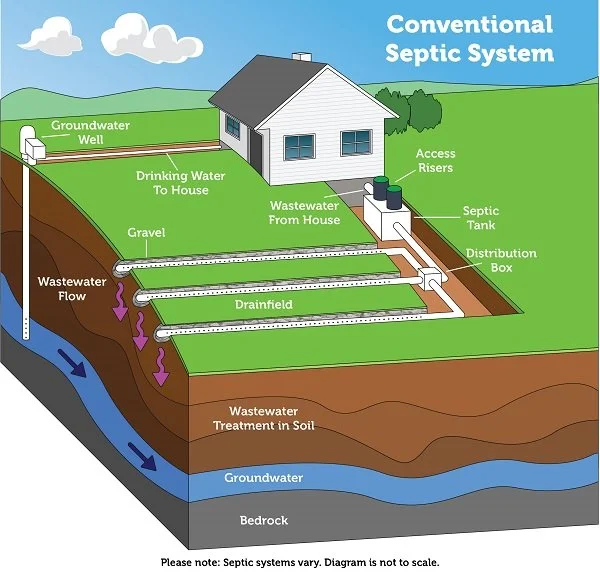
Common Septic Components
Why I/A Systems Require Specialized Inspections
I/A systems are regulated more strictly than conventional septic systems and must be inspected and monitored to remain compliant under Title V and local Board of Health requirements.
A proper I/A system inspection evaluates:
Mechanical and electrical components
Treatment units and media
Pumps, blowers, alarms, and controls
System performance and operational status
Compliance with MassDEP approval conditions and local permits
Unlike conventional systems, an I/A system has deeded maintenance & inspection requirements to confirm the system is functioning properly or in compliance.
Innovative/Alternative (I/A) Septic Systems
Why Proper I/A Inspections Matter
Regulatory compliance: I/A systems must meet specific MassDEP approval conditions to remain in service.
Environmental protection: Many I/A systems are installed specifically to reduce nitrogen or other pollutants in sensitive watersheds.
Transaction readiness: Missing or outdated inspection records can delay sales or refinancing.
Failure prevention: Early detection of mechanical or treatment issues can prevent system failure and costly repairs.
At Amex Construction, our team is trained in the inspection of Innovative / Alternative septic systems, with hands-on experience across the South Shore and Cape Cod. We understand both the technology and the regulatory expectations that come with it.
What Are Innovative / Alternative (I/A) Septic Systems?
Innovative / Alternative (I/A) septic systems are advanced wastewater treatment systems approved by the Massachusetts Department of Environmental Protection (MassDEP for use under Title 5. Unlike conventional septic systems, I/A systems rely on mechanical, biological, or chemical treatment processes to achieve higher levels of wastewater treatment.
Because of their design, I/A systems are commonly used in environmentally sensitive areas, on small or constrained lots, or where soil conditions, groundwater levels, or setback limitations make traditional systems impractical.
When I/A System Inspections Are Required
I/A system inspections are typically required:
At property transfer
On a scheduled basis as defined by the MassDEP approval, operating permit, Deed Restriction or Board of Health order
When required by a lender or local Board of Health
When system performance issues or alarms are reported
Many I/A systems also require:
Ongoing operation and maintenance (O&M)
Inspection by trained or certified providers
Documentation submitted to the local Board of Health